
You can apply for a DVRO in California, get a judge's signature that same day, and still hold an order the respondent is not bound by until someone legally serves it.
Service is the step where cases quietly fall apart. A missing or badly filled Proof of Service can lead a judge to continue your hearing or dismiss the case outright.
This guide is for anyone filing without a lawyer who needs every form right the first time, plus the friend or relative sitting beside them at the courthouse.
What Is a DVRO in California, and Who Can Ask for One?
A Domestic Violence Restraining Order (DVRO) is a California court order that protects a person from abuse by someone they share a close domestic relationship with. The relationship decides eligibility first, and the abuse decides the rest.
Spouses, ex-partners, parents and children, and people related by blood or marriage can usually petition. Physical or sexual harm counts, and so does emotional abuse, whether it already happened or was only threatened.
The order can keep the abuser away from you. Depending on the facts, a judge may also attach financial terms or child custody terms, so think about those needs early.
How Do You Apply for a DVRO in California?
You apply by completing Form DV-100 and filing it at your local Superior Court, where a judge can review it the same day. The whole application lives or dies on what you write in those pages.
Form DV-100 Goes First
The Request for Domestic Violence Restraining Order (Form DV-100) is the main petition. You may also need Form DV-110 for a temporary order, plus child custody add-ons if kids are involved.
The legal wording looks heavy at first glance. Missing a supporting form slows the judge down, and speed is the whole point when you feel unsafe.
Write Your Statement Like a Timeline
Your personal statement should list specific dates, places, and examples of abusive behavior. "He's always threatening me" gives a judge almost nothing to act on.
Attach what backs it up: text messages, photos, and medical records. If you're unsure whether something matters, include it. Extra context tends to help more than it hurts.
Filing at the Superior Court Costs Nothing
Filing a DVRO petition in California is generally free. Expect a line at the clerk's window, so bring snacks and a charged phone, because courthouse vending machines have opinions about exact change.
If the danger feels immediate, ask for a temporary restraining order at the same time. The judge can grant short-term protection while the full case waits for a hearing.
What Happens in the First Few Days After Filing?
A judge often reviews your request the same day, though it can take a day or two. You walk out with either a temporary order, a hearing date, or both.
Same-Day Review and Your Hearing Date
A Temporary Restraining Order (TRO) is a short-term, enforceable order that usually lasts until the DVRO hearing. It can require the respondent to stay away from your home, workplace, or school.
The court also sets a hearing date. Both you and the respondent are expected to attend, and the full DVRO decision happens there.
TRO vs. Full DVRO at a Glance
The two orders work differently, and mixing them up leads to bad planning.
| Feature | Temporary Restraining Order (TRO) | DVRO After Hearing |
|---|---|---|
| When it's issued | Same day or within a day or two | At the scheduled hearing |
| Who is present | Usually just the petitioner | Both parties expected |
| How long it lasts | Until the hearing | Decided by the judge |
| Enforceable? | Yes, once served | Yes, once served |
Notice the bottom row: neither order protects you in practice until the respondent has been properly served.
How Do You Serve a DVRO So It Actually Holds Up in Court?
Serving a DVRO means officially handing the respondent the court papers, and only someone over 18 who is not part of the case may do it. You cannot serve the papers yourself.
Who Is Allowed to Serve the Papers
California allows a few types of servers. Each must be 18 or older and uninvolved in the case:
- A friend or relative who has no role in the case
- A professional process server, paid to handle delivery
- Law enforcement, which California agencies can provide for restraining orders
Personal service, meaning the papers go directly into the respondent's hands, is the standard method. The server then completes a Proof of Service form confirming delivery.
Why I'd Skip the Friend and Ask Law Enforcement First
Asking a friend to serve the papers is the usual suggestion because it feels fast and easy. I disagree for one reason: a mistake on Form DV-200 can get your case continued or dismissed, and officers produce documentation that's harder to contest.
A friend also stands face to face with someone accused of violence. I think that's a lot to ask of a person who loves you, especially when California law enforcement can do the same job with records and training behind it.
File Form DV-200 the Moment Service Is Done
Form DV-200 (Proof of Service) tells the court the respondent knows about the order and the hearing date. File it at the courthouse right away, not the morning of the hearing.
Watch for these common mistakes on the Proof of Service:
- Letting someone involved in the case, or under 18, serve the papers
- Leaving the form unsigned or partly blank
- Forgetting to file it, so the judge has no proof service ever happened
My take: treat the date of service as the real start of your protection, more than the date the judge signed. Until DV-200 is filed, the court has no record that the respondent was ever told.
How Do You Protect Your Privacy and Prepare for the Hearing?
California's Safe at Home program offers address confidentiality for people who fear an abuser finding them. If your new address appears anywhere in your paperwork, ask about it before filing.
What Court Clerks and Self-Help Centers Can Tell You
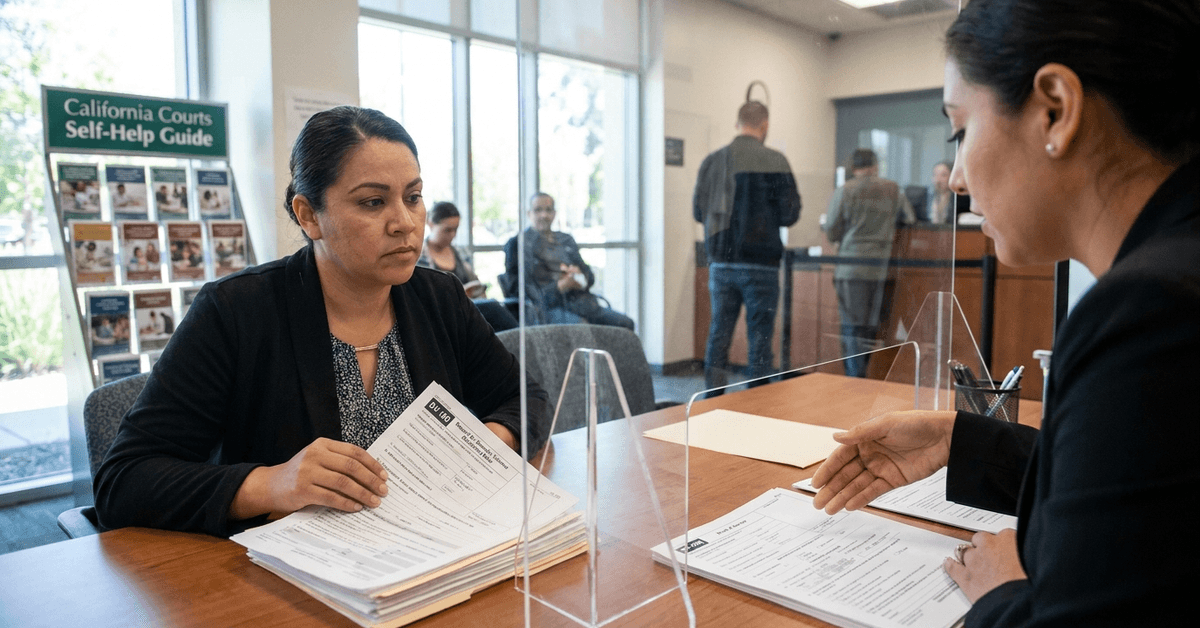
Clerks and court self-help centers answer questions about forms and deadlines. They can't give legal advice, but they see these cases daily and can spot a blank field fast.
The California Courts self-help guide to domestic violence restraining orders has the official forms and is updated regularly. Download forms there instead of from random third-party sites.
If the Respondent Fights the Order
The respondent has the right to contest the DVRO at the hearing. Both sides can bring evidence and witnesses, so pack your organized records in date order.
Expect a few uncomfortable moments in that room. Before the hearing, these steps can steady you:
- Reread your DV-100 statement so your testimony matches it
- Bring copies of every exhibit for the judge
- Line up a counselor or advocate for emotional support
The National Domestic Violence Hotline offers confidential support and live counselors across the U.S. Seeing the respondent again can rattle anyone, and talking it through beforehand is a smart move.
Staying Protected After the Order Is Granted
If the DVRO is granted, follow every term yourself. Violations, even by mistake, can weaken your future legal standing, so keep a copy of the order on you.
Questions People Ask About Filing and Serving a DVRO in California
These come up again and again from people filing on their own.
- Q: How much does it cost to file a DVRO in California?
Filing a DVRO petition is generally free at California Superior Courts. A professional process server will charge a fee, which is one more reason to ask law enforcement about service. - Q: Can I serve the DVRO papers myself?
No. The server must be over 18 and not involved in the case, so the petitioner can never do it personally. - Q: How fast can I get a temporary restraining order?
A judge often reviews the request on the same day you file. Sometimes it takes a day or two, so file early in the day if you can. - Q: What happens if the respondent violates the TRO?
A served TRO is enforceable by law. A violation can bring an immediate police response and possible arrest, so call right away and keep your copy handy. - Q: Do I need a lawyer to get a DVRO in California?
Many people file without one using the official forms and court self-help centers. A lawyer may still help if the respondent hires one or custody is on the line.
Conclusion
Getting a DVRO in California takes paperwork, patience, and attention to the forms most people rush through. The judge's signature starts protection on paper, but proper service and a filed DV-200 make it enforceable.
Ask law enforcement about serving, organize your evidence early, and use the self-help center freely. Your safety deserves a process done right, so take the next step today with the official forms in hand.