Personal Independence Payment costs the DWP around £194.60 per week at its maximum rate as of April 2026. That number sits on paper, waiting. But roughly 58% of first-time applicants never see a penny of it.
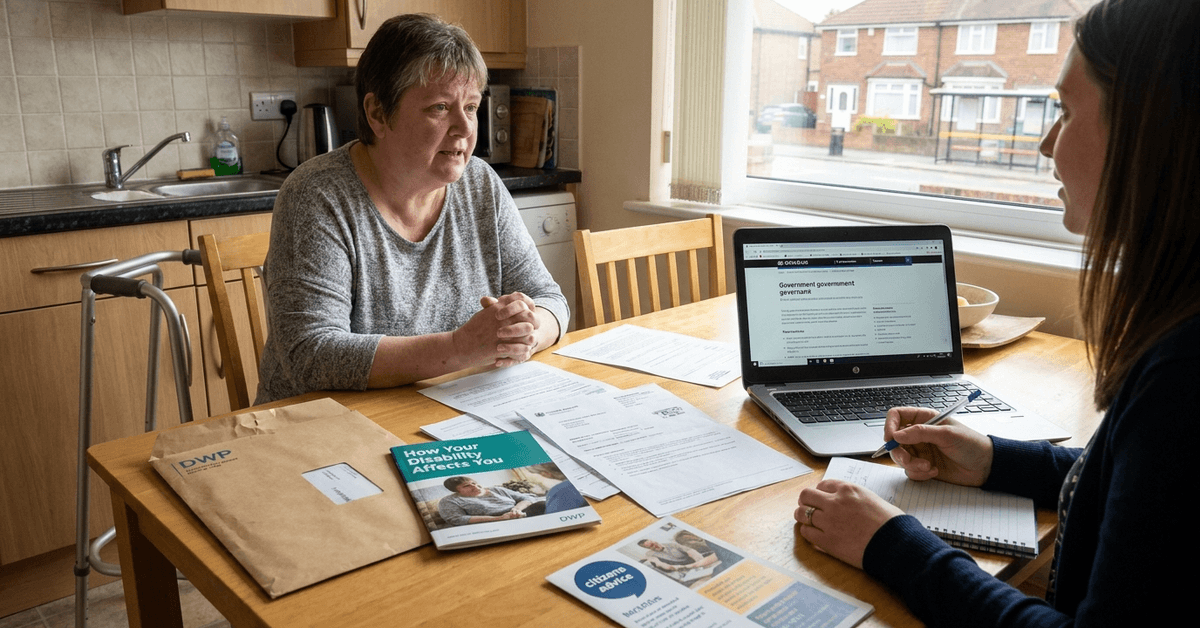
The gap between eligibility and approval rarely comes down to medical severity. It comes down to a single form: the PIP2, titled "How Your Disability Affects You." How someone fills that form out decides the outcome more than their diagnosis ever will.
This guide is for the person applying to PIP for the first time with a fluctuating condition: chronic pain, anxiety, depression, fibromyalgia, anything that has good days and terrible days. That fluctuation is exactly what the system struggles to score.
PIP Eligibility: Age, Residency, and the Three-Month Rule
The basic eligibility criteria are simple enough, but a few details trip people up.
PIP is open to anyone aged 16 to State Pension age. It is not means-tested, so savings and income do not affect eligibility.
The condition must have affected daily life or mobility for at least three months, and the applicant must expect it to continue for at least nine months after applying.
Residency Requirements for PIP
Applicants need to have lived in England, Scotland, or Wales for at least two of the previous three years.
Armed forces members and their families sometimes qualify under different rules. Northern Ireland runs its own separate PIP scheme through the Department for Communities.
Terminal Illness and the Special Rules Process
Anyone diagnosed with a terminal illness expected to result in death within 12 months can apply under Special Rules for End of Life. This process skips the standard assessment and typically results in a faster decision, often within weeks rather than months.
The PIP2 Form Is Where Claims Are Won or Lost
The phone call to the DWP that starts a PIP claim takes about 20 minutes. It collects a National Insurance number, GP details, and contact information. Nothing complicated.
Then the PIP2 form arrives. And this is where 58% of claims fall apart.
Why Diagnosis Alone Scores Zero Points
PIP does not award points based on a condition's name or clinical severity. The DWP uses a points-based scoring system across 12 daily living and mobility activities. Each activity has descriptors worth 0, 2, 4, 8, or 12 points.
I would tell any first-time applicant to ignore the instinct to sound capable on the PIP2 form. The DWP scores the form against the descriptors.
The descriptors ask about difficulty, frequency, and need for assistance. An honest account of a bad day scores higher than a brave summary of a manageable one.
Describe the Worst Days, Not the Best
Every PIP advice forum repeats "describe your worst days." I think that advice is incomplete for people with conditions like fibromyalgia or PTSD where bad days can vary wildly.
The better approach: describe three specific scenarios. A bad morning. A bad evening. A day when leaving the house did not happen.
Then state how often those scenarios occur per week or per month. The DWP needs frequency and consistency, not a single dramatic story.
What Happens at the PIP Health Assessment
After the PIP2 form reaches the DWP, a health assessment follows. This might be a phone call, video call, or face-to-face appointment at a local assessment centre.
The assessor is usually a nurse, physiotherapist, or occupational therapist. Not a doctor specializing in the applicant's condition.
The Assessment Is Practical, Not Medical
The assessor asks questions about cooking, dressing, bathing, managing money, talking to people, and getting around.
They observe things like how the applicant sits, stands, or walks during the appointment. They are trained to note discrepancies between the form and the conversation.
One thing that catches first-time applicants off guard: the assessment report carries enormous weight. The DWP decision-maker usually follows the assessor's recommendation. And the assessor's report is often where points quietly disappear.
Can Someone Come to the Assessment?
Absolutely. Bringing a friend, carer, or family member is allowed and, in my view, worth doing for anyone with a fluctuating condition. The companion can add context that the applicant might downplay or forget in the moment.
PIP Rates for 2026/27: What the Award Looks Like
The DWP confirmed a 3.8% increase to PIP rates starting April 2026. The rates break down across two components, each with a standard and enhanced tier.
| Component | Standard Rate (Weekly) | Enhanced Rate (Weekly) |
|---|---|---|
| Daily Living | £76.70 | £114.60 |
| Mobility | £30.30 | £80.00 |
An applicant receiving both enhanced rates would get £194.60 per week, paid every four weeks as £778.40. PIP is tax-free and does not count as income for most other benefits.
A successful PIP claim can also unlock additional support. Enhanced daily living qualifies a carer for Carer's Allowance at £86.45 per week.
Enhanced mobility opens access to the Motability scheme. And PIP itself can trigger disability premiums on Universal Credit.
What Evidence to Send and What to Skip
Supporting evidence can strengthen a PIP claim, but sending a stack of unrelated medical records does the opposite.
The documents that carry weight tend to be specific and recent:
- A letter from a GP, consultant, or psychiatrist describing how the condition affects daily functioning
- Prescription lists showing current medication and dosage
- A statement from a carer or support worker describing assistance they provide
- Occupational therapy or physiotherapy reports, if available
A common mistake: sending a 40-page hospital discharge summary. Decision-makers scan for relevance.
A two-paragraph letter from a GP that specifically mentions difficulty with cooking, washing, or leaving the house does more work than a full medical history.
When PIP Gets Refused: Mandatory Reconsideration and Tribunal Appeals
A refused PIP claim is not the end. But 65% of refused claimants treat it that way.
The first step after refusal is a mandatory reconsideration request. This must be submitted within one month of the decision letter.
The DWP reviews the decision internally. As of mid-2025, only about 25% of mandatory reconsiderations resulted in a changed award.
Tribunal Appeals Have a 66% Success Rate
If the mandatory reconsideration does not change the decision, the next step is a Tribunal appeal. And the success rate tells a very different story: 66% of PIP claimants who appealed to a tribunal in the three months to March 2025 had a successful outcome.
I think the standard advice to "wait and see" after a mandatory reconsideration fails is wrong. Given that 66% of tribunal appeals succeed, the better move for someone who scored close to the threshold is to lodge the appeal immediately after receiving the Mandatory Reconsideration Notice.
Free support for appeals is available through Citizens Advice and Scope. Both organizations offer help preparing tribunal submissions.
If Circumstances Change After the Award
The DWP requires claimants to report changes in their condition. A worsening condition could mean a higher award. An improvement could reduce payments.
Not reporting changes can lead to overpayment recovery. And in some cases, it can affect other benefits linked to PIP, like Carer's Allowance or the disability element of Universal Credit. The reporting process runs through the PIP enquiry line on GOV.UK.
Awards are also subject to planned reviews, typically every one to three years. At review, around 38% of claims are reduced or stopped. Keeping an up-to-date file of medical evidence between reviews makes the renewal process far smoother.
Questions People Ask About Claiming PIP
These are questions that come up repeatedly in PIP forums and advice centres.
- Q: Can I claim PIP if I work full-time?
PIP is not means-tested and has no earnings limit. A full-time salary does not disqualify an applicant. The assessment looks only at how a condition affects daily living and mobility, not employment status or income. - Q: How long does a PIP claim take from start to finish?
The DWP targets a decision within 16 weeks of the initial call, but many claims take longer. Mandatory reconsiderations can add another 8 to 10 weeks. A tribunal appeal can add six months or more depending on the region. - Q: Does PIP affect Universal Credit payments?
PIP itself does not reduce Universal Credit. A successful PIP claim can trigger a disability premium on Universal Credit, increasing the overall payment. The two benefits work alongside each other.
Conclusion
The PIP system rewards specificity over severity, and frequency over drama. A well-documented claim from someone with a moderate condition can outscore a vague one from someone far worse off.
That imbalance frustrates people, but it also means preparation is the single biggest variable a first-time claimant can control.
Start the PIP2 form early, write about the bad days in detail, and do not stop at mandatory reconsideration if the numbers do not add up.