Moving to Japan as an expat comes with its challenges, especially if your first priority is to find a job that’s immediate and accessible. Among the fastest entry points for foreigners are packing jobs in Japan.
This article explores why these roles are often a fit for newcomers, what to expect in the workplace, and how to approach your job search effectively—even if your Japanese language skills are still developing.
Why Packing and Warehouse Jobs Appeal to Expats in Japan
One reason many expats consider packing jobs is their low barrier to entry. Employers often prioritize reliability and availability over fluency in Japanese, making this sector friendly for beginners.
Besides that, these positions offer a stable way to start earning soon after arrival. Of course, the work itself might feel repetitive sometimes, but that’s true in plenty of countries, not just Japan.
Low Language Requirements
It’s not a universal rule, but entry-level warehouse jobs generally require minimal Japanese.
Many postings may specify just basic greetings or simple directional language. This is a practical advantage if you’re still enrolled in language classes or just adjusting to life here.
Immediate Income Opportunities
For those who need to stabilize finances early, packing roles tend to offer hourly pay that is predictable and transparent.
Rates might vary by region and company. In most urban centers, the minimum wage increases annually, so it’s worth checking local labor office sites for current figures.
Access for Multiple Visa Types
Foreigners with a valid work visa, student visa with work permission, or spousal visa, often find themselves eligible for these jobs.
This accessibility helps make packing work a common starting point for a lot of expats, though of course, your circumstances may differ somewhat.
Where to Find Packing Job Openings in Japan
Japan’s job-hunting process for manual labor differs a bit from what you might expect. Most hiring is handled via specialized job sites, agencies, or in-person referrals. Here are some of the most established options:
Major Job Portals
- GaijinPot Jobs: A well-known resource for foreigners. While many listings focus on teaching, there’s a dedicated section for warehouse and logistics work.
- YOLO JAPAN: Offers frequent postings for packing jobs, often specifying preferred visa types and experience levels.
- Job agencies such as Good Job Creations or Ikkyu: Agencies frequently place expats into temporary or short-term packing assignments.
Interpretation of Job Descriptions
Many packing job ads might be partially or fully in Japanese. Sometimes, sites will offer automated English translations, but these can be a bit clunky.
Key words to look for: “梱包” (konpou) for packing, “仕分け” (shiwake) for sorting, and “倉庫” (souko) for warehouse. If in doubt, Google Translate can help, but perhaps ask a Japanese-speaking acquaintance to double-check important details when possible.
On-Site Recruitment and Local Connections
Some warehouses post job ads directly at their gate or in neighboring convenience stores. Walking in and asking (politely) about openings can work, though it’s more common in rural or industrial areas.
Sometimes you’ll find that fellow expats already working nearby know of upcoming vacancies. This isn’t always predictable, but it’s a small community—absurd as it may sound, casual conversations can lead to unexpected opportunities.
What to Expect: Typical Duties and Work Culture
Packing jobs in Japan, while straightforward, still reflect the country’s strong work culture and sense of order.
The rhythm is steady, and the rules can be quite detailed, especially around punctuality and proper attire. Here’s a breakdown of standard responsibilities and workplace norms:
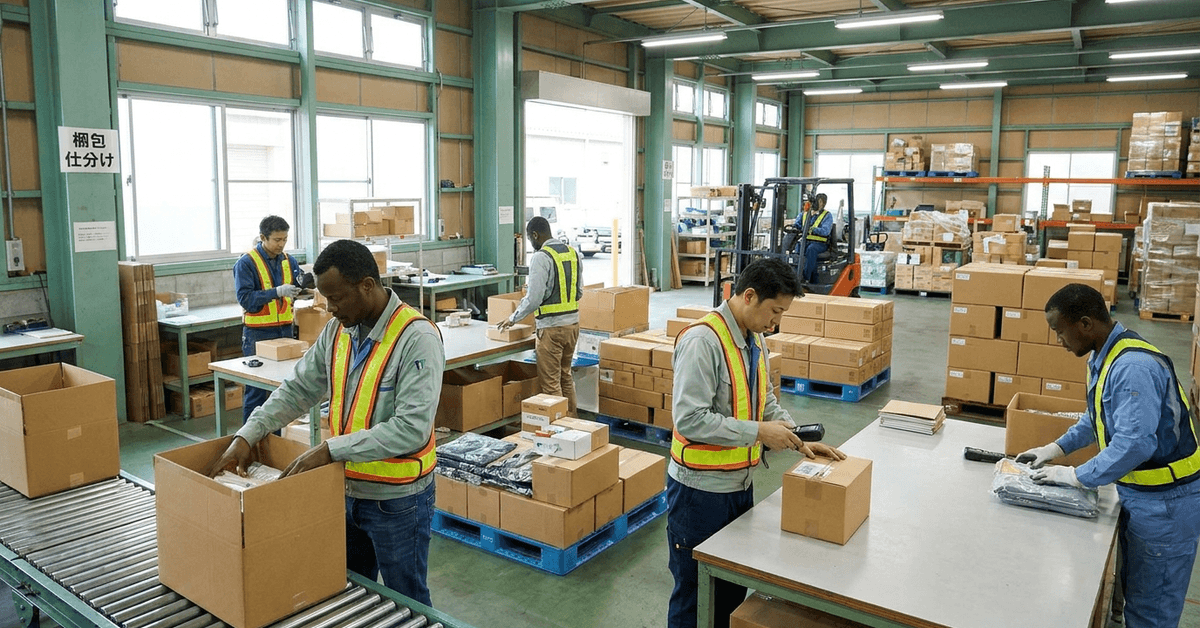
Daily Tasks at Packing Jobs
- Assembling boxes or crates
- Labelling and taping packages
- Checking inventory and counting products
- Sorting, scanning, or stacking items
- Occasional basic cleaning at workstation
Shifts may be fixed or rotational. Many positions offer overtime, especially during holidays or shopping seasons. While the work isn’t physically demanding compared to construction, it can involve standing for several hours.
Breaks are scheduled at regular intervals, with some sites providing free beverages or snacks—though not everywhere, to be honest.
Work Culture and Expectations
Tardiness is frowned upon in most Japanese workplaces, even for warehouse roles. Uniforms or work vests are typically provided, and staff are expected to keep their area tidy.
While the atmosphere is usually polite, interactions might feel a bit formal at first, especially when you’re new. If unsure about etiquette, observing and quietly following others usually works. That said, in my experience, coworkers were often happy to explain things if asked.
Essential Skills and Physical Requirements
Most packing jobs don’t need special skills beyond basic numeracy and reliability. Some roles require lifting boxes (usually less than 15 kg), while others involve repetitive fine-motor tasks.
Eye for detail helps reduce errors and keeps supervisors happy. Willingness to follow instructions closely is valued, sometimes even more than previous experience.
Health and Safety Basics
Many companies conduct briefings or provide visual guides about workplace safety. Correct posture, careful handling of goods, and use of provided gloves or masks are usually part of daily routines.
Work injuries are rare, but it’s good practice to report issues promptly—some companies may even require this, especially when machinery is involved.
Necessary Documents and Hiring Process
Employers usually ask for a residence card (“zairyu card”), bank book copy (for salary payments), and proof of address. If you’re on a student visa, a work permit from your university or local immigration office will also be necessary.
Interviews can be brief, often less than 20 minutes, and may include a site tour or short demonstration of tasks. Even so, don’t feel discouraged by a bit of hesitation on an employer’s side—sometimes, it’s just a matter of paperwork timeline, not a reflection on you specifically.
Legal and Tax Considerations for Foreign Workers
Japan’s labor laws generally apply to expats, including minimum wage and paid leave. Employers are expected to enroll you in industrial accident insurance and sometimes health insurance (depending on hours worked). Check your work visa to be sure of any hour limitations; student visa holders usually have a cap of 28 hours per week during term.
Income Tax Withholding
Employers usually deduct income taxes at source—in most cases, you don’t need to file separately if your only income is from part-time work. However, special rules apply if you stay in Japan for longer terms or your total annual salary exceeds certain thresholds.
If this topic makes you uneasy, local city offices can offer basic advice in English or help connect you with specialist services. As always, better to clarify early than be caught off guard at tax time.
Tips to Improve Your Success When Applying
Landing your first packing job isn’t always an instant process. Competition may pick up in major cities, particularly for day or short-term shifts. Being flexible about hours and location expands your options.
Sometimes, submitting applications in person has more impact than online—there’s less risk of being lost among automated screenings, though it may feel old-fashioned.
Consider Learning Basic Japanese
Picking up job-related vocabulary or greetings can be surprisingly helpful, even if full fluency still feels distant. In my own case, mastering a few standard phrases made coworkers more willing to engage and clarify tasks. Plus, it shows a willingness to adjust and connect—qualities that Japanese employers tend to appreciate.
Prepare Simple Work History or Reference
If you have relevant experience from your home country or previous jobs, prepare a short note or resume, ideally in both English and Japanese (even if it’s basic). This small extra effort can help differentiate you from other candidates, at least in some employers’ eyes.
Stay Updated With Seasonal Openings
Big e-commerce seasons (like autumn and early winter) often bring a surge in warehouse hiring. Setting up alerts on job sites ensures you’re among the first to see new postings. Often, timing can be the main factor that separates applicants.