
The Rakuten Credit Card charges no annual fee and pays 1 point per ¥100 spent. That ratio sounds boring until you realize most competing cards in Japan don't even clear that bar for foreigners.
A huge chunk of Rakuten card guides spend their word count on the application steps. The part they skip is what happens after approval: how the SPU multiplier system quietly dictates whether your points add up to anything real or stay decorative.



This article is for the foreign resident in Japan who already has a bank account, a phone number, and a residence card, and now needs to decide if Rakuten is the right first credit card or just the easiest one to get.
The ¥100-to-1-Point Ratio and Why It Tricks People
Rakuten's base earning rate is 1% on all purchases, anywhere. Spend ¥10,000 at a drugstore in Shinjuku, get 100 points back. One point equals one yen. Simple math.
But the marketing says "up to 18.5x" through the SPU (Super Point Up) program, and that number floats around every guide online as though it's a realistic target.
The median annual point acquisition for Rakuten users sits around 4,000 points per year. That's ¥4,000. Enough for a decent lunch, maybe two.
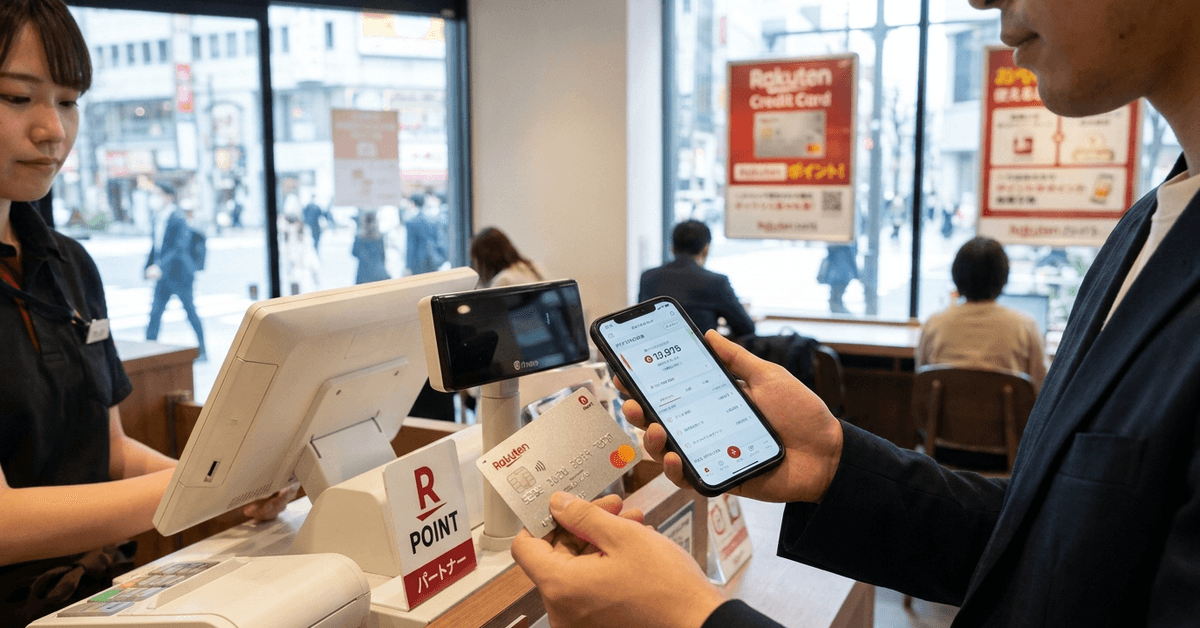
The gap between 18.5x and the median tells a story.
Reaching high multipliers means subscribing to Rakuten Mobile, opening a Rakuten Bank account, holding a Rakuten Securities account, shopping through the Rakuten Ichiba app instead of the browser, and spending above minimum thresholds in categories like Rakuten Fashion (¥3,000/month) and now FamilyMart (¥3,000/month as of July 2026).
Each service adds 0.5x to 4x. Miss one activation step, and the multiplier stays flat.
SPU Multiplier: Stacking Services to Hit 6% or More
The SPU program rewards you for living inside Rakuten's ecosystem. That word "ecosystem" sounds corporate, but the mechanic is straightforward: use more Rakuten services, earn more points on Rakuten Ichiba purchases specifically.
A realistic starter stack for a foreign resident looks like this:
- Rakuten Card payment on Ichiba: +2x
- Rakuten Mobile subscription: +4x (requires separate SPU entry page activation after signup)
- Rakuten Bank as card payment source: +0.5x
- Shopping via the Rakuten Ichiba app: +0.5x
That combination lands around 7x on Ichiba purchases, meaning ¥10,000 spent returns roughly ¥700 in points.
The catch is that this multiplier applies only to Rakuten Ichiba spending, not to the drugstore run or the izakaya bill. Off-platform purchases still earn the flat 1%.
The Rakuten Mobile SPU Activation Nobody Mentions
Since a 2025 update, subscribing to Rakuten Mobile no longer automatically boosts your SPU rate. A manual activation on the SPU entry page is required after signing up.
Skip that step and your mobile subscription contributes zero to the multiplier. I would bet a decent number of Rakuten Mobile users have no idea this step exists, because the card's own onboarding emails bury it.
Rakuten Gold Card: The Upgrade That Rarely Pays Off
The Rakuten Gold Card costs ¥2,200 per year (tax included), with an additional ¥550 per family card. It offers slightly higher point rates on Ichiba and some overseas travel insurance perks.
I think the Rakuten Gold upgrade is a bad move for most foreign residents, and I'd point to the ¥2,200 annual fee against a backdrop where the standard card's SPU stacking already gets you to 6-7x on Ichiba without paying anything.
The Gold card's extra point bonus on Ichiba spending only breaks even if your monthly Ichiba purchases consistently exceed ¥30,000. For a single expat buying groceries at a physical supermarket and occasionally ordering household goods online, that threshold rarely gets hit.
There is no hidden fee waiver for the Gold card. Some forums and older blog posts imply one exists. It does not. The ¥2,200 charge appears every year regardless of spending volume.
When Gold Might Make Sense
The Gold card includes overseas travel insurance coverage and airport lounge access at some domestic airports.
If your job or lifestyle has you flying domestically several times a year, the lounge benefit alone might justify ¥2,200. For everyone else, the standard card with a strong SPU stack does more.
Applying for the Rakuten Card as a Foreigner in 2026
The application runs entirely online through Rakuten's card page. The form asks for your name (in katakana), address, employer details, income, and residence status. Approval decisions typically arrive within a few days, sometimes hours.
What Causes Rejections
Rejections happen, and Rakuten never discloses specific reasons. But patterns emerge from expat communities and forum discussions:
- Incomplete katakana conversion of your name: the form auto-converts, but it sometimes garbles non-standard romanizations
- Listing zero months at current address: even if you just moved, a very short residence period raises flags
- No Japanese phone number on file: a domestic mobile number is expected, not an overseas one
- Unstable visa status: tourist visas are ineligible, and short-term visas under 1 year reduce approval odds
A common mistake is applying within the first month of arriving in Japan. The six-month mark, with a salary history and stable address, tends to produce better results.
Documents and Timeline
The initial application rarely asks for document uploads. Rakuten may request proof of income or identification at a later review stage. Once approved, the physical card arrives within about a week.
Some applicants report a "review" status that lingers for days without explanation. That limbo period doesn't necessarily mean rejection.
Earning Points Outside the Rakuten Ecosystem
The card earns 1% everywhere Visa, Mastercard, JCB, or Amex is accepted (you choose the network at application). But the real point volume lives inside Rakuten's own platforms.
Pairing the card with Rakuten Pay for in-store payments or Rakuten Edy for prepaid transactions can unlock campaign-specific bonuses. These campaigns rotate frequently and require manual opt-in through the Rakuten app or emails.
Speaking of emails: Rakuten sends a lot of them. An almost absurd amount. Buried inside that flood are targeted point campaigns, limited-time multiplier boosts, and coupon codes for specific stores.
The people earning 10,000+ points per year are the ones who scan those emails instead of deleting them.
Super Sale and Shopping Marathon Events
Rakuten Ichiba runs Super Sale and Okaimono Marathon events roughly every month. During these windows, buying from multiple shops in a single event period stacks an additional multiplier on top of SPU.
Purchasing from 10 different shops during a Marathon can push the event multiplier alone to 10x.
The trap: people buy things they don't need just to hit shop count thresholds. If you're buying ¥1,000 items from seven shops you'd never visit otherwise, the "bonus" points barely cover the spending. Stock up on things you'd buy anyway: toilet paper, laundry detergent, rice, contact lens solution.
Interest Rates and the Balance Trap
Rakuten's revolving credit interest rate sits above 15% annually. Carrying a balance for even one month wipes out months of accumulated points.
A ¥50,000 balance carried for 60 days costs more in interest than most users earn in points over six months.
Set up automatic full payment (一回払い, ikkai barai) from your linked bank account. The single-payment option is the default, but the revolving payment option (リボ払い, ribo barai) sometimes appears as a "recommended" setting during campaigns.
Ignore it. Revolving payment is how Rakuten makes money off cardholders, and the interest math is punishing.
| Feature | Standard Card | Gold Card |
|---|---|---|
| Annual fee | ¥0 | ¥2,200 (tax included) |
| Base point rate | 1% everywhere | 1% everywhere |
| Ichiba SPU bonus | +2x | +2x (slightly higher cap) |
| Overseas travel insurance | Up to ¥20M | Up to ¥20M (expanded) |
| Airport lounge access | No | Select domestic lounges |
| Family card fee | N/A | ¥550 per card |
The standard card covers what most single foreign residents need. The Gold card's extras target frequent domestic travelers and households running consolidated family spending through Ichiba.
Questions People Ask About Rakuten Credit Card in Japan
These come up constantly in expat forums and search queries, and a few deserve answers that go beyond the standard FAQ.
- Q: Can I apply for a Rakuten Card right after arriving in Japan?
Technically yes, but approval odds improve after about six months of residence with a salary history. The application requires a Japanese address and phone number, and very new residents tend to trigger additional review steps. - Q: Do Rakuten Points expire?
Regular points last one year from the last time you earned or used points. But limited-time points (期間限定ポイント) from campaigns expire much faster, sometimes within 45 days. Check expiration dates in the Rakuten Point Club app before they vanish. - Q: Is Rakuten or EPOS better for a first card in Japan?
EPOS has no annual fee either and offers strong benefits at Marui department stores. Rakuten pulls ahead if you plan to shop on Ichiba or use multiple Rakuten services. EPOS wins if you want a card that works well at physical retail locations around Marui properties and prefer points that never expire. - Q: Are Rakuten Points taxable in Japan?
Loyalty points are generally not taxed for personal use. If points come from business expenses or are classified as income by the issuer, tax treatment may differ. A tax advisor familiar with Japanese regulations can clarify edge cases. - Q: Can I use Rakuten Points at convenience stores?
Yes. Rakuten Points are accepted at FamilyMart, and the July 2026 SPU integration means spending ¥3,000+ monthly at FamilyMart now also boosts your Ichiba multiplier by 0.5x.
Conclusion
The Rakuten Credit Card is the easiest entry point into Japanese credit for most foreign residents. Point stacking through SPU rewards those who commit to the ecosystem, not casual users.
Skip the Gold upgrade unless domestic travel or family card consolidation justifies the ¥2,200. Read the campaign emails, automate full payment, and let the points work on purchases you'd make regardless.