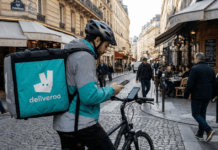
A Deliveroo courier in France earned €25.70 per hour gross in 2025. That sounds decent until you learn it dropped 15% over five years, and after social contributions, the take-home shrinks fast.
Most guides about food delivery jobs in France treat the gig like a side-hustle ATM. Sign up, start pedaling, collect cash. They skip the part where your purchasing power tanks year after year while platform fees stay fixed.


This article is for expats, international students, and newcomers to France who see courier work as an obvious first job. I wrote it to give the full financial picture that registration-focused guides bury under cheerful bullet points.
Courier Pay Across French Delivery Platforms in 2026
The gap between platforms is wider than people assume, and it changes how you should pick one.
France's platform labor regulator, the ARPE (Autorité des relations sociales des plateformes d'emploi), publishes annual earnings data. The 2025 numbers tell a clear story about where the money is and where it went.

ARPE Hourly Earnings by Platform (2025)
The +4.7% bump in 2025 was the platform's first increase since ARPE began tracking in 2021. Between 2021 and 2024, Uber Eats courier purchasing power fell 34.2% when adjusted for inflation. Deliveroo's dropped 25.2% over the same period.
| Platform | Gross Hourly Rate (2025) | Year-Over-Year Change |
|---|---|---|
| Delicity | €35.40 | -0.7% |
| Deliveroo | €25.70 | -2.4% |
| Stuart | €22.70 | -5.0% |
| Uber Eats | €21.50 | +4.7% |
One takeaway jumps out: Delicity pays roughly €14 more per hour than Uber Eats, but operates in fewer cities. Geography decides your options more than preference does.
The €3 Minimum Per Course at Uber Eats
Since May 2025, Uber Eats guarantees a minimum of €3 per delivery. The average delivery pays about €5.65, broken into a base fee plus a per-kilometer rate: €0.81/km in Paris and €0.76/km outside Paris.
Roughly 70% of Uber Eats' 65,000 active French couriers had completed at least one delivery below that €3 floor before the policy kicked in. So the minimum matters, but it barely moves the needle on hourly income.
The Micro-Entrepreneur Registration That Stalls Everything
Every guide mentions SIRET numbers and the micro-entrepreneur system. Few explain how this step eats weeks of your timeline and creates ongoing tax obligations that catch newcomers off guard.
Getting Your SIRET Through URSSAF
The registration happens at autoentrepreneur.urssaf.fr. The process is free, and it can technically be completed online in a single session. But the SIRET number itself takes days to weeks to arrive, and without it, no major platform will finish your onboarding.
Three things slow people down:
- French-language forms with no official English version on the URSSAF portal
- Address verification requirements that trip up people using temporary housing
- The APE activity code selection, where courier work falls under 5320Z (other postal and courier activities), a classification that confuses first-time applicants
Social Contributions and Tax You Owe From Day One
The micro-entrepreneur social contribution rate for courier services sits at approximately 21.2% of gross revenue. First-year registrants who qualify for ACRE get a reduced rate, typically halved for the first 12 months.
I think the common advice to "just register and figure taxes out later" is dangerous, specifically because the 21.2% rate applies to gross revenue, not profit.
A courier earning €1,500/month gross owes about €318 in social charges regardless of expenses for fuel, phone data, or bike repairs. Add the income tax component and you can be looking at a 25%+ effective rate on money that already felt tight.
Picking the Right Platform for Your City
The platform that pays best depends entirely on where you live and what vehicle you use.
Uber Eats and Deliveroo: Available Almost Everywhere
Both cover most cities with populations above 100,000. Uber Eats has roughly 65,000 active couriers nationally and accepts both bicycles and scooters.
Deliveroo operates across 10 markets globally and works with over 176,000 restaurant partners in France alone.
Deliveroo currently pays higher per hour on average (€25.70 vs €21.50), but courier forums consistently report that Uber Eats sends more frequent orders in medium-sized cities. Frequency can beat rate.
Smaller Platforms Worth Checking
Frichti focuses on Paris and Lyon with a healthier-food angle and structured shift options. Glovo handles restaurant orders plus groceries and retail items, adding variety to the delivery mix.
Delicity's €35.40/hr average looks incredible, but its city coverage is limited enough that most readers won't have access to it.
My Take on Multi-Apping
I would argue against the standard advice to run two or three apps simultaneously, based on the ARPE data showing Deliveroo's hourly rate at €25.70 versus Uber Eats at €21.50.
That €4.20/hr difference means a courier who commits fully to Deliveroo during peak windows (lunch 11:30-14:00, dinner 18:30-21:30) will likely out-earn someone splitting focus between two lower-volume apps. Juggling apps means missing orders on both while you're mid-delivery on one.
Peak-hour dedication on the better-paying platform beats scattered availability across three mediocre ones.
Documents, Insurance, and the Stuff That Delays Activation
The signup forms are online, but the paperwork pipeline behind them is analog and slow.
What Every Platform Asks For
The document list looks consistent across Uber Eats, Deliveroo, and the rest:
- Valid photo ID (passport or carte d'identité)
- Proof of address less than 3 months old
- SIRET number from your micro-entrepreneur registration
- Liability insurance certificate (assurance responsabilité civile professionnelle), especially for scooter and moped couriers
- Carte grise (vehicle registration) if using a motorized vehicle
Non-EU applicants also need a valid work permit or visa authorizing employment. Platforms verify this during onboarding, and missing documents stall the process for weeks.
Insurance Is Trickier Than It Sounds
Personal liability insurance for bicycle couriers costs less and is easier to find. Scooter couriers need commercial vehicle coverage, and quotes vary wildly.
Some platforms now offer optional accident insurance for a monthly fee, but the coverage details deserve careful reading before signing up.
I'd suggest getting insurance quotes before registering as a micro-entrepreneur. If the insurance cost makes the math unworkable for your vehicle type, you save yourself the registration hassle entirely.
What the Earnings Drop Means for New Couriers in 2026
The ARPE data paints a five-year trend that new couriers should see clearly. Uber Eats courier purchasing power fell 34.2% between 2021 and 2024 in inflation-adjusted terms. Stuart dropped 26.6%. Deliveroo fell 22.7%.
Delivery times per order have increased by about 35% on Uber Eats France, meaning each delivery takes longer for roughly the same pay. Couriers compensate by working longer hours or stacking platforms. Neither fixes the math.
Rain and cold bring weather bonuses on some platforms: Uber Eats has offered up to €15 for three hours during heavy rain. But foul weather also brings higher accident risk and faster equipment wear on bikes and scooters.
A 2025 report from France's ANSES (national health and safety agency) flagged courier work as carrying elevated physical and social risks. The work is physically demanding, often isolating, and offers zero paid sick days under micro-entrepreneur status.
Questions People Ask About Food Delivery Jobs in France
These cover angles that come up repeatedly in courier communities and expat forums.
- Q: Can students on a student visa do food delivery in France?
Student visas in France typically allow up to 964 hours of work per year (about 60% of full-time). Courier work under micro-entrepreneur status counts toward that limit. Check your specific visa conditions on the prefecture website, because exceeding the cap risks your residency. - Q: How long does the full signup process take from zero to first delivery?
Expect 2 to 4 weeks minimum. The SIRET number alone can take 5 to 15 business days. Add time for insurance quotes, document uploads, and platform verification. Starting delivery on day one after deciding to sign up is not realistic. - Q: Do food delivery couriers in France get any benefits or protections?
Micro-entrepreneurs have no unemployment insurance, no paid leave, and no employer-provided health coverage. A 2023 sector agreement set a minimum hourly floor of €11.75, but most couriers earn above that. The protections are thin compared to salaried work.
Conclusion
The five-year earnings decline across every major platform tells a story that registration guides prefer to skip. Courier work in France can still generate income for people who need flexibility and have realistic expectations.
The job has changed since 2021, though, and anyone starting now should budget for lower hourly returns than the numbers from three years ago suggested. Do the math on social contributions, insurance, and equipment costs before the first pedal stroke.