A barista gig at Starbucks keeps showing up on every "best first job" list. And if you're a college student scrolling job boards at 1 a.m., that green apron probably looks appealing.
But the Starbucks barista job has a gap between the marketing and the morning shift. The tuition benefit gets all the attention while the scheduling math gets none.



This piece breaks down what the role looks like from behind the counter. Expect specifics, not slogans.
If a Starbucks barista position is on your shortlist, the details ahead should save you a few surprises.
What a Starbucks Barista Shift Looks Like in Practice
The Morning Rush Is Its Own Sport
Forget the cozy coffee shop image. Peak hours at a high-traffic Starbucks location feel closer to a kitchen line during dinner service.
Orders stack up on the screen, customizations pile on, and the drink queue moves at a pace that demands muscle memory.
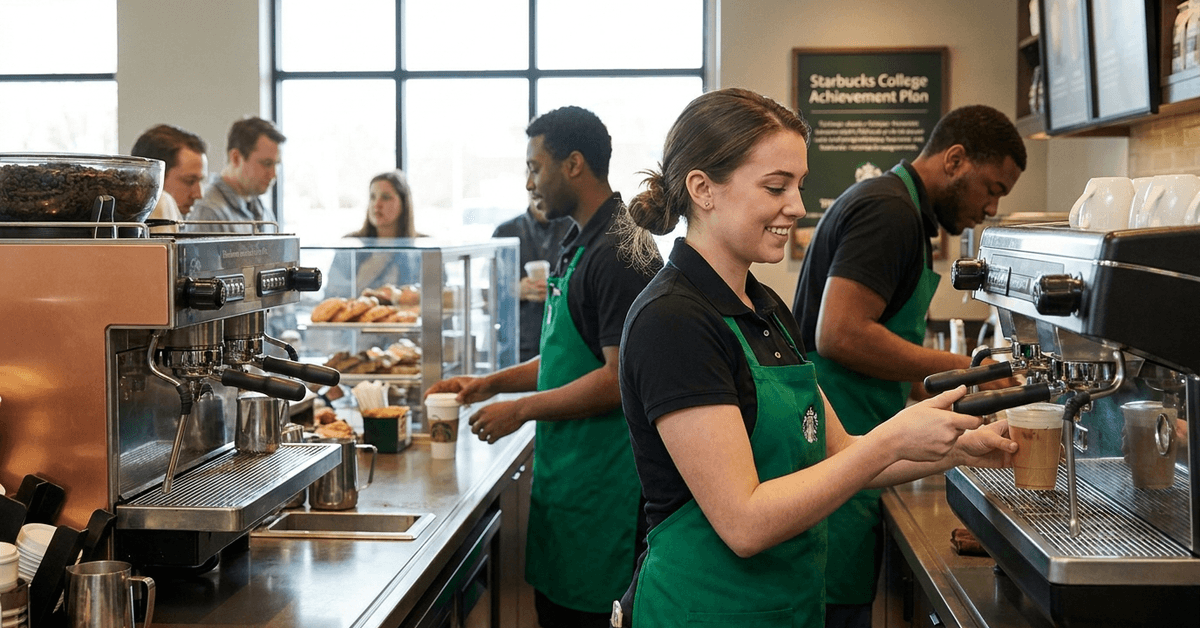
The first few weeks are humbling. Recipes for seasonal drinks rotate, and regulars expect their exact order without repeating it. Every barista goes through a period of feeling slow before the motions click.
Scheduling Flexibility and Its Limits
Starbucks offers scheduling that can bend around classes or a second job. Shifts range from early morning opens (sometimes 4:30 a.m.) to evening closes, with weekend availability expected at almost every location.
The flexibility is real, but it comes with a trade-off. Getting enough hours to qualify for benefits requires consistency your manager can count on. Swapping shifts sounds easy until three other baristas need the same Saturday off.
The Onboarding System Is Structured (and Fast)
New hires shadow experienced partners and work through training modules covering drink recipes, food safety, and POS systems. The structured approach means you're making drinks within days, not weeks.
That speed has a downside, though. The real learning curve hits during your first solo rush, not during training.
Mistakes happen, and the stores that handle this well focus on correction without pressure. Not every location has that patience built into its culture.
Starbucks Barista Benefits: Breaking Down the Fine Print
Healthcare That Part-Timers Can Access
This is where the Starbucks barista job separates itself from other food service roles. Eligible part-time employees can access medical, dental, and vision insurance after meeting minimum hour requirements.
Mental health resources are included in U.S. locations, which matters for a workforce skewing younger.
The catch is the word "eligible." Hours need to be consistent, and dropping below the threshold during a semester of heavy exams can affect coverage continuity.
Read the benefits guide on Starbucks' official careers page before assuming coverage kicks in automatically.
The ASU Tuition Program: Impressive but Conditional
The Starbucks College Achievement Plan through Arizona State University covers full tuition for online bachelor's programs. On paper, this is one of the strongest education benefits in food service.
I think the tuition benefit is the wrong primary reason to apply for a Starbucks barista job, because eligibility requires averaging 20 or more hours per week through ASU's enrollment periods.
Students juggling full course loads and exam schedules often struggle to maintain that hour floor during crunch weeks. The benefit is real, but treating it as guaranteed income toward tuition creates a planning risk that nobody talks about.
A better approach: apply because the job fits your schedule and skill-building goals, then layer the tuition benefit on top if your hours cooperate.
Retirement and Stock Options Most Baristas Ignore
401(k) plans and the Starbucks Bean Stock program (stock purchase options) are available to eligible employees. Matching and vesting timelines apply, and the details vary based on tenure and hours worked.
The stock program is the overlooked piece. Younger workers rarely think about equity compensation in a food service job, but baristas who stay 1-2 years and participate can accumulate a modest position.
It won't replace a savings account, but it's money most competitors in this space don't offer at all.
| Benefit | Starbucks Barista | Typical Fast-Food Role |
|---|---|---|
| Part-time healthcare | Available after hour threshold | Rarely offered to part-timers |
| Tuition assistance | Full tuition (ASU online, conditional) | Limited or none |
| 401(k) / stock options | Both available with eligibility | 401(k) sometimes, stock rarely |
| Free product per shift | Coffee or tea each shift | Meal discount common |
| Mental health resources | Included in U.S. benefits | Uncommon at entry level |
The difference is clearest in healthcare and education access, which most food service competitors don't extend to part-time staff.
Who Should and Shouldn't Apply for a Starbucks Barista Job
The Profile That Fits
Not every personality thrives behind the espresso bar. The baristas who stick around and enjoy the work tend to share a few traits:
- Comfort with repetition that suddenly gets chaotic. The job is routine until it isn't, and peak hours demand quick pivots between drink types and customer requests.
- Genuine enjoyment of brief human interactions. Regulars become familiar faces, and that rapport is a real part of the daily experience.
- Willingness to work physical shifts on your feet. A full shift means standing, moving between stations, and cleaning constantly. Desk-job energy doesn't translate here.
When the Job Doesn't Fit
Some signals suggest a different role might work better:
- Low tolerance for noise and speed. A packed Starbucks during morning rush is loud, fast, and unrelenting for 2-3 hours straight.
- Need for predictable, identical daily tasks. Drink customizations and seasonal menus keep the work varied, which can feel exhausting rather than interesting for some people.
- Expectation of quick promotion. Supervisory roles exist and internal movement happens, but timelines depend on location turnover and regional needs. A barista at a fully staffed suburban store might wait longer than one at a high-turnover city location.
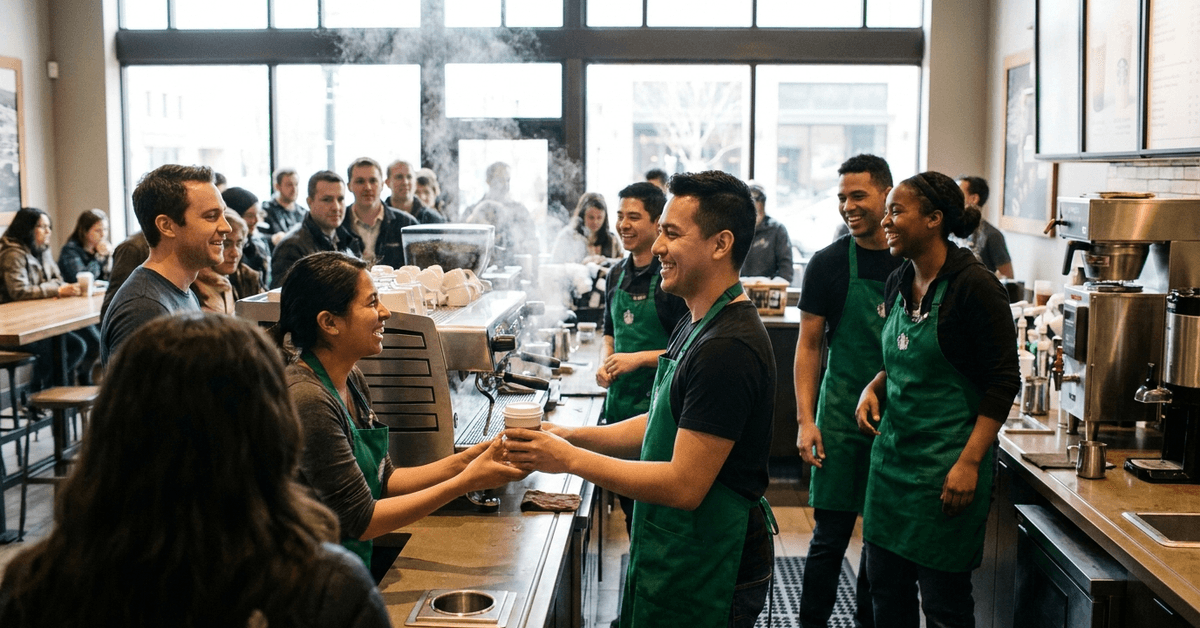
The Application Process for Starbucks Barista Positions
Applying Online Through the Careers Portal
The entire process starts on the Starbucks Careers website. Search by zip code, filter for barista roles, and expect to fill out a standard application with availability details and a brief resume upload.
One detail worth noting: the application asks behavioral questions about teamwork and customer scenarios. Don't rush these. Hiring managers at Starbucks tend to weight cultural fit and availability over prior barista experience.
A thoughtful answer about handling a frustrated customer at a retail store carries just as much weight as coffee-specific knowledge.
The Interview Focuses on Fit, Not Expertise
Interviews are conversational. Expect questions about how you handle busy environments, work with a team, and manage competing tasks.
Specific coffee knowledge is trained on the job, so the interview leans toward personality and reliability.
Bring concrete examples. A story about helping a difficult customer at any previous job, or managing a group project deadline, translates directly.
The interviewer wants to see how you think under pressure, not whether you know the difference between a flat white and a latte.
Legal Basics: Age, Tax Forms, and Dress Code
Minimum age requirements range from 16 to 18 depending on local labor laws. All U.S. hires complete tax withholding forms (W-4) at onboarding and receive W-2 statements annually.
The dress code centers around the iconic green apron with a modest clothing policy underneath. Tattoo and piercing policies have loosened in recent years, though individual store managers still have some discretion in enforcement.
Check your specific location's standards during the interview if visible tattoos or piercings matter to you.
The Skill Nobody Mentions: Customer Service Muscle Memory
Every article about Starbucks barista jobs talks about benefits and free coffee. Almost none mention the transferable skill that outlasts the job itself.
Customer service muscle memory is the ability to read a person's mood in three seconds, adjust your tone, and resolve a problem before it escalates.
Baristas who work 6-12 months at a busy Starbucks develop this instinct faster than employees at lower-volume service jobs. That skill transfers directly into sales, hospitality management, and client-facing tech roles.
I'd argue this is the most undervalued part of the Starbucks barista experience. The ASU benefit disappears when you leave.
The 401(k) vests on a timeline. But the speed at which you learn to handle people under pressure stays with you permanently, and it's the thing future employers care about most on a resume from this stage of your career.
Questions People Ask About Starbucks Barista Jobs
Q: Do Starbucks baristas get benefits if they only work part-time? Part-time baristas can qualify for healthcare, 401(k), and education benefits after meeting minimum weekly hour thresholds. The specific number of hours required varies, so check the benefits eligibility section on the Starbucks careers site for your region.
Q: How much does a Starbucks barista make per hour in 2026? Pay varies by location and local minimum wage laws. Starbucks has historically set its starting hourly rate above federal minimum wage, but the exact figure depends on your city and state. Ask about the starting rate for your specific store during the interview.
Q: Is the Starbucks ASU tuition program really free? The program covers full tuition for eligible employees enrolled in Arizona State University's online bachelor's programs. Eligibility requires maintaining a minimum average of weekly hours, and the benefit applies to specific degree programs. It's conditional, not automatic.
Q: Can I get hired at Starbucks without any barista experience? Absolutely. Starbucks hires for personality and cultural fit over prior coffee experience. The training program covers drink recipes, equipment, and store procedures. Previous customer service experience in any industry is helpful but not required.
Q: How long does the Starbucks hiring process take? The timeline varies by location and staffing needs. Some applicants hear back within a week, while others wait several weeks. Applying to multiple nearby locations can speed up the process if one store has a more immediate opening.
Conclusion
The Starbucks barista job works best for people who want structure with room to grow. Benefits like tuition and healthcare exist, but the hour requirements deserve serious attention.
The lasting payoff is the speed at which this role builds real customer service instincts. Treat the benefits as a bonus, and the daily grind becomes a lot easier to appreciate.