
Sukiya lists thousands of part-time openings across Japan on any given week. The careers page is clean, the filters work, and the application form takes about ten minutes. Every piece of it is in Japanese.
That detail gets buried in most hiring guides. They'll tell you Sukiya accepts foreign applicants (true) and that no experience is required (also true). But the entire pipeline, the website, the resume format, the in-store interview, runs in Japanese at a level that catches unprepared applicants off guard.



This article is for foreign students and working holiday visa holders in Japan who want a Sukiya arubaito but need a realistic picture of what the process demands before the first shift starts.
The Language Question Sukiya Guides Skim Over
A lot of job-hunting advice for foreigners in Japan treats language as a soft preference. Something like "basic Japanese helps." At Sukiya, the gap between "helps" and "required" is smaller than most guides suggest.
Sukiya's Hiring Pipeline Runs Entirely in Japanese
The official Sukiya careers page lists openings by prefecture, role type, and shift availability. There is no English toggle. The application form asks for contact details, preferred shifts, education history, and visa status, all in Japanese.
Even browser translation tools stumble on some of the form fields because they use abbreviations and restaurant-industry shorthand.
The interview, usually held inside the store or over the phone, happens in Japanese too. Managers ask about scheduling and past work, and they expect spoken answers, not rehearsed scripts.
I'd estimate that JLPT N3 or above is the functional floor for getting through this process without a Japanese-speaking friend sitting next to you.
My Take on Experience vs. Language Ability
I think the widespread advice that restaurant experience gives foreign applicants an edge at Sukiya misses the real bottleneck.
A hiring manager at a busy Sukiya location during lunch rush cares less about whether you've worked a fryer before and more about whether you can take a verbal correction in Japanese, read the prep board, and communicate an order problem to a coworker without slowing down the line.
Language ability outranks food service experience for foreign applicants at Sukiya, and it does so by a wide margin. The training system handles kitchen skills. It does not teach you Japanese.
Part-Time and Full-Time Sukiya Positions
Sukiya splits its workforce into two tracks, and the labels matter more than they seem to at first glance. The part-time track (arubaito) is where the vast majority of foreign workers land.
The full-time track has better pay and benefits but comes with requirements that screen out most visa-holding applicants.
Arubaito Roles and Shift Premiums
Part-time Sukiya jobs fall into a few categories. Kitchen staff handle prep and cooking. Front-of-house workers take orders, run food, and clean. Night shift specialists work the 24-hour locations and often earn a shift premium on top of the base hourly rate.
Pay starts near the local minimum wage, which varies by prefecture. Tokyo's minimum wage sits higher than, say, a rural Tohoku location, so the same role pays differently depending on geography. Some stores offer staff meals and small bonuses, though these perks are not standardized across all locations.
None of these part-time roles require prior experience. That is a real policy, not a marketing line. Sukiya trains new arubaito from scratch, and the training period is paid in most cases.
Full-Time Tracks and Internal Promotion
Full-time positions include shift supervisors, restaurant managers, and the rare corporate role like training coordinator or regional manager. These jobs come with social insurance enrollment, better hourly or salaried pay, and a clearer promotion path.
Sukiya has a pattern of promoting part-timers into full-time roles. A student who works arubaito for a year or two and then graduates into full-time employment is not an unusual trajectory.
But the jump depends on visa eligibility: a student visa does not permit full-time employment outside of school break periods, and switching to a work visa tied to a restaurant chain adds its own paperwork.
Sukiya Application Steps That Trip Up First-Timers
The application itself is not complicated. But a few details in the process are specific to Japan's hiring culture, and skipping them can stall an otherwise strong application.
The Resume Photo and Visa Status Fields
Japanese resumes (rirekisho) still expect a passport-style photo attached. A plain background, shoulders visible, no filters.
The online form will ask for your visa type and its expiration date. Having this information ready before starting the form saves time and avoids errors.
The visa status field is not optional. If your visa does not permit work, the application stops there. Student visas and dependent visas allow part-time work, but both carry restrictions that the form does not explain. More on that below.
The In-Store Interview and What Managers Ask
Interviews are short. Fifteen minutes is common. The manager will ask about your available days and hours, whether you can work weekends or holidays, and whether you have any restaurant experience.
One detail that surprises some applicants: managers sometimes remember walk-in visitors. Stopping by the store before applying, even just to ask if they are hiring, can work in your favor at smaller locations.
Here are a few things that improve your chances:
- Prepare a short jikoshokai (self-introduction) in Japanese, even a rough one. It signals effort.
- List any customer-facing work on your resume, including retail or tutoring. Sukiya does not require food experience, but public-facing work translates well.
- Bring a printed copy of your residence card to the interview. Some managers want to confirm visa type on the spot.
- State your preferred shifts clearly. Flexibility helps, but agreeing to shifts you cannot keep does not.
Honest answers about availability matter more than polished responses. Over-promising your schedule and then requesting changes in the first month is a fast way to lose shifts.
Visa Rules and the 28-Hour Weekly Cap
This is where the gap between "Sukiya hires foreigners" and the practical limits gets concrete. The most common visa types for foreign part-timers in Japan are student visas and dependent visas. Both allow part-time employment, but both cap weekly hours at 28 during the academic term.
During school breaks (spring, summer, winter), the cap rises, and students can work closer to full-time hours. Dependent visa holders do not get that break-period extension.
Exceeding the 28-hour limit is a violation that Japan's Immigration Services Agency takes seriously. Penalties can affect visa renewal. Sukiya, as a large chain, tracks hours through its payroll system, so the company side is unlikely to ask you to exceed limits.
But working at two part-time jobs simultaneously can push total hours over the cap without either employer knowing.
| Feature | Student Visa | Dependent Visa | Working Holiday Visa |
|---|---|---|---|
| Weekly hour limit | 28 hrs (term), more during breaks | 28 hrs, no break extension | No hourly cap |
| Full-time eligible | Only during breaks | No | Yes, up to 1 year |
| Social insurance | Depends on hours and income | Depends on hours and income | Depends on employer |
| Renewal risk if hours exceeded | High | High | N/A (single-entry visa) |
Working holiday visa holders face fewer restrictions on hours but are limited to a one-year stay with no renewal in most cases.
Tax Withholding and Payslip Details
Sukiya issues payslips and withholds income tax at the source. Full-time employees also see deductions for health insurance and pension contributions.
Part-timers earning below certain thresholds may see minimal withholding, but this varies by prefecture and total annual income.
One thing to confirm at the interview or during onboarding: whether uniform costs are deducted from your pay. Some Sukiya locations charge for the uniform; others do not. The policy is not chain-wide, so asking upfront avoids a surprise on the first payslip.
What a Typical Shift at Sukiya Feels Like
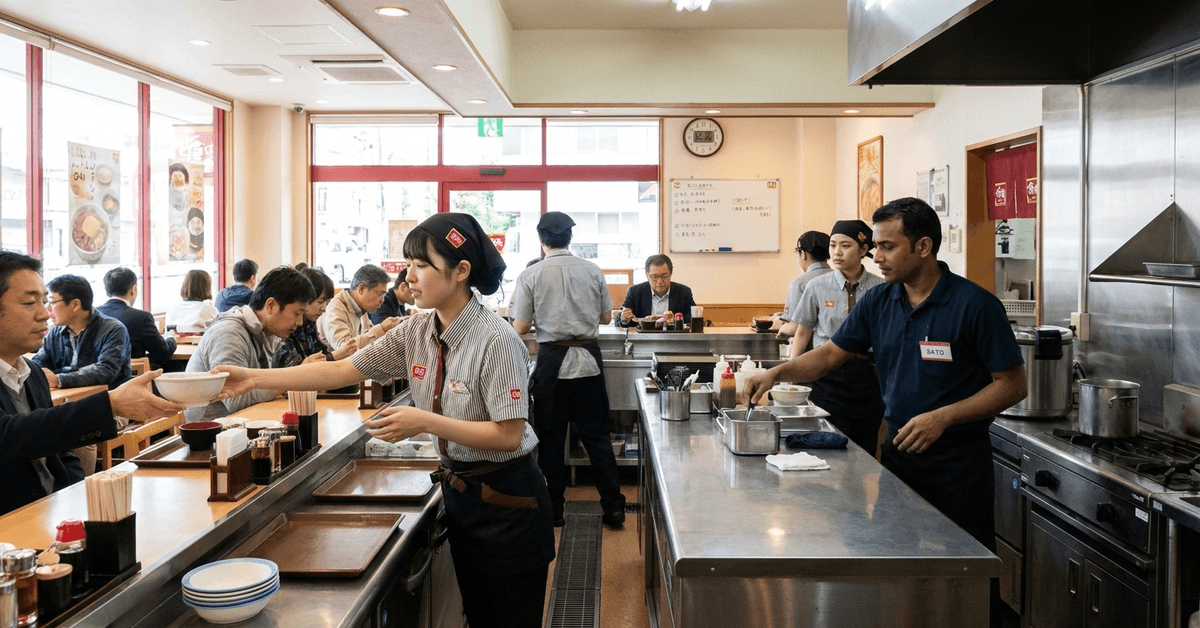
The pace is fast. Lunch rush and dinner rush are exactly what they sound like: a steady stream of orders, tight kitchen space, and little downtime. New hires often describe the first two weeks as overwhelming before the muscle memory kicks in.
Physically, the work means standing for the full shift, carrying trays, scrubbing down surfaces, and sometimes handling the grill during peak periods. Breaks are mandated by Japanese labor law, but some workers mention that break timing can feel inconsistent at busier stores.
If a break gets skipped or shortened, asking the shift supervisor about it directly is the right move. Japanese labor law requires paid breaks for shifts over a certain length, and Sukiya as a chain complies with this, though individual store enforcement can vary.
Questions People Ask About Sukiya Jobs
These come up often in forums and search results, and a few deserve more specific answers than they usually get.
- Q: Can I apply to Sukiya if I only speak basic Japanese? Passing the interview requires enough spoken Japanese to discuss your schedule and answer simple questions about past work. Reading the application form also demands at least intermediate reading ability. A friend who reads Japanese can help with the form, but the interview is solo.
- Q: Does Sukiya pay for training shifts? Training is paid in most locations, though the hourly rate during training may sit at the base level before any shift premiums apply. Ask during the interview to confirm the specific store's policy.
- Q: How quickly does Sukiya respond after an application? Response times vary, but most applicants hear back within one to two weeks. If a store is urgently hiring, the turnaround can be faster. Applying to multiple locations at once is common and accepted.
- Q: Do night shifts at Sukiya pay more? Late-night premiums are standard at 24-hour Sukiya locations. Japanese labor law requires a 25% premium for work between 10 PM and 5 AM, and Sukiya follows this. The exact hourly rate depends on the store's base pay.
- Q: What happens if I exceed the 28-hour visa limit while working at Sukiya? Exceeding the limit can trigger problems during visa renewal, up to and including denial. Sukiya tracks hours internally, but if you hold a second part-time job, neither employer sees the combined total. Keeping your own records is the only reliable safeguard.
Conclusion
A Sukiya arubaito can be a solid first job in Japan, especially for students building language skills on the clock.
The barrier is not experience or a polished resume; it is Japanese ability and knowing your visa limits cold. Get those two things straight, and the rest of the application is a ten-minute form and a fifteen-minute chat.
The hardest part is already behind you if you can read this far into an article about Japanese employment law without flinching.