Many families in Brazil face challenges paying their electricity bills each month. The Social Energy Tariff offers a chance to reduce these expenses, especially for low-income consumers.
For those who depend on technology, applying via mobile devices has become easier, opening up a practical route to access benefits.


This article explores how the process works, who qualifies, and what steps can help users navigate the application process effectively. Anyone interested in lowering their energy costs may find useful tips here.
What Is the Social Energy Tariff?
The Social Energy Tariff is a government initiative created to lower electricity costs for eligible segments of the population.
It aims to make access to energy more affordable, particularly for low-income households, indigenous communities, and quilombola groups across Brazil.
The discount, when approved, appears directly on the monthly bill, making it easier for families to manage their budget without complicated voucher systems.
More and more, people are discovering the convenience of mobile applications for registration and follow-up.
Key Benefits and Impacts of the Social Energy Tariff
Although the percentage of reduction varies, recipients often notice a considerable difference in their monthly energy outlays. This benefit helps reduce the risk of power cuts and financial strains for those living with tight budgets.
For individuals balancing work, school, and family, having reliable access to electricity can make a significant difference in everyday comfort and opportunity.
At the same time, spreading information about the tariff promotes social inclusion and supports long-term economic development.
Monthly Discounts That Help Households
Most participants observe a 10%–65% reduction in costs, depending on total energy consumption and household profile. This flexibility reflects the scheme's intention to adapt to various real-life situations.
Some people say they've managed to save enough each month to redirect funds toward healthier food, school supplies, or unexpected medical expenses.
That's not a guarantee, of course, but it represents the kind of positive outcome that policy designers aimed to achieve.
Promoting Financial Stability
Aside from the direct discount, stable access to energy often improves the ability to look for work, pursue education, or run a small home business.
Households benefiting from the Social Tariff might experience less frequent interruptions in service, which translates to a calmer and more predictable home life. For many, this kind of predictability is invaluable, especially during times of economic uncertainty.
Who Qualifies for the Social Energy Tariff?
Eligibility depends on criteria set by the Brazilian government. The goal is to reach those most in need. Still, navigating eligibility requirements can be confusing.
Most energy providers and the official government channels clarify the rules, but people sometimes hesitate to apply simply because they are unsure if they qualify. That's where this overview comes in handy.
Main Eligibility Conditions
- Enrollment in the Cadastro Único (CadÚnico) program for social benefits.
- Monthly family income per person is less than or equal to half the minimum wage.
- Either the head of household or a resident receives the Benefit of Continuing Provision (BPC) due to age or disability.
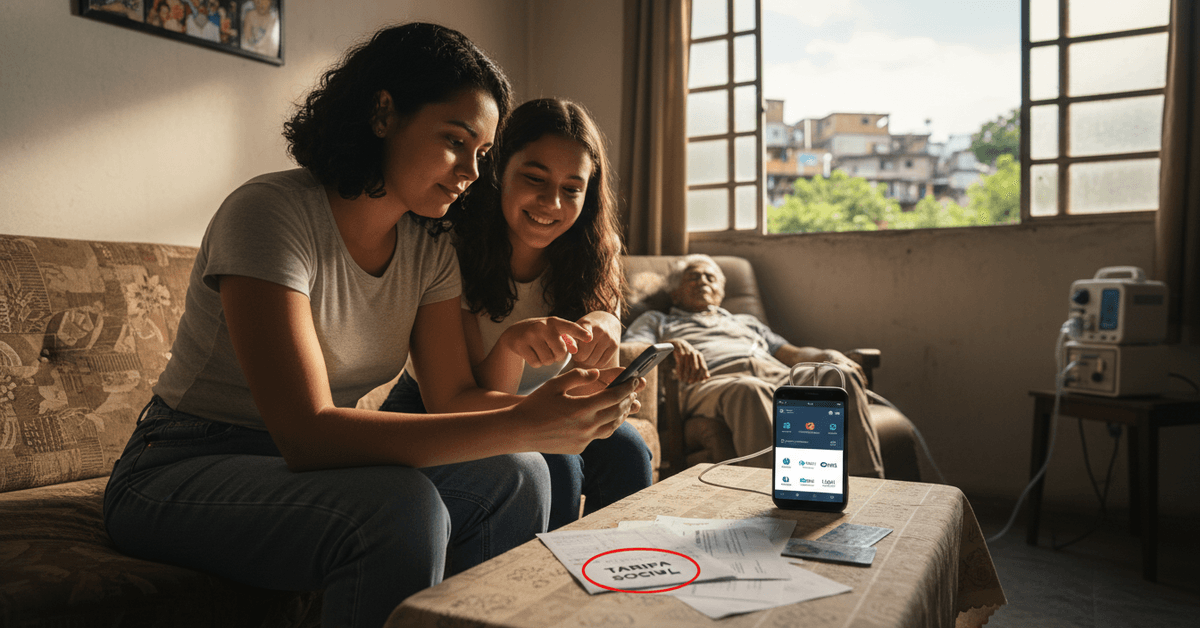
- Families with someone requiring continuous use of electrical equipment for medical reasons may also qualify (under certain income limits).
- Indigenous families and quilombola households registered in CadÚnico have additional considerations.
Perhaps not every applicant fits neatly into defined boxes, and documentation requirements may feel intimidating at first. Energy providers often maintain guidance lines for those in doubt.
Why Use a Mobile Application to Register?
Registering for the Social Energy Tariff was once a bureaucratic challenge, typically involving queues, paper forms, and in-person visits. Technology has changed that.
Using a mobile app has emerged as possibly the most convenient route, especially for people with limited time or mobility. There's something reassuring about being able to manage the process from home or even on the bus, using just a smartphone.
It's not a perfect experience for everyone, of course; digital literacy and access to stable internet remain concerns. However, for most urban and many rural Brazilians, the smartphone is central to daily life.
Advantages of Mobile-Based Application
- 24/7 access for application and follow-up.
- Eliminates travel costs and waiting times at service centers.
- Immediate electronic documentation upload and verification in many cases.
- Real-time updates on the progress of your request.
- In-app guidance or customer support chat for quick answers.
Some people share stories of completing their application in less than 15 minutes, which reflects the flexibility built into digital tools.
Others admit feeling a bit lost during the registration journey, underlining the need for clear instructions and perhaps extra patience on both sides of the process.

How to Apply for the Social Energy Tariff via Mobile
The specific steps may vary slightly depending on the regional energy distributor, but general procedures are similar nationwide.
Anyone interested in applying by mobile might start by checking if their provider offers an official app or a responsive website. Below, you'll find the most typical steps involved in digital registration.
Step-by-Step Application Overview
- Download the official app of your energy company (e.g., Enel, Neoenergia, CPFL, Light) from the Apple App Store or Google Play.
- Create a personal account if needed. Most apps ask for CPF and basic ID information.
- Look for sections like “Solicitar Tarifa Social” or “Benefits.” These are usually highlighted on the home screen or included in the menu.
- Upload documents—typically a photo or PDF of proof of CadÚnico registration, CPF, and energy bill.
- Review and submit your application through the app.
- Wait for a confirmation notification or follow app-based progress trackers to see updates.
Some providers allow users to capture photos of documents with their camera directly inside the app. In other cases, applicants are redirected to an external website to finalize the request.
The process can feel a little different from one company to another, so taking a moment to read the app's terms makes sense.
If You Encounter Difficulties
Technical issues or uncertainty about eligibility aren't uncommon. When difficulties arise, the customer support chat feature or phone contact listed within the app can offer direct help.
Alternatively, neighborhood social service centers or even friends and family may have relevant insights based on their own experience. A little persistence tends to pay off.
What Documents Are Necessary?
Having the right documents ready simplifies the application. Not everyone will need every item listed here, as each individual’s circumstances differ. But there are some common requirements that most applicants encounter.
- Valid CPF of the applicant.
- Recent electricity bill identifying the service address.
- CadÚnico registration proof (the NIS number—Número de Identificação Social—should be visible).
- Identity document with photo (RG or similar).
- If requesting for a dependent with health issues, medical report and equipment usage details.
In truth, sluggish app performance or poor photo quality can slow things down a bit. Double-checking the quality of uploaded files can help avoid unnecessary delays, though not everyone has access to a high-end mobile camera—it's rarely a deal-breaker.
Tips and FAQs About the Social Energy Tariff for Mobile Applicants
Common Questions
- Can you apply if your CadÚnico registration is out of date? Usually, the system checks for a current CadÚnico record, so updating is a smart move if necessary.
- What if you move to a new address? The tariff benefit generally follows the household's address and must be updated if changing locations.
- Are there limits to consumption? Discounts are scaled according to monthly kWh usage. Exceeding certain thresholds can reduce or eliminate the benefit.
- How often should records be updated? Providing current registration information annually, or whenever family income changes, is recommended.
Suggestions for Smoother Applications
- Use a secure WiFi connection if possible to avoid upload errors or app crashes.
- Keep copies of all supporting documents stored on your phone or cloud backup.
- If documentation requirements seem unclear, consulting your provider’s FAQ or helpline can save time.
- After approval, monitor your bill to ensure the discount appears in the following cycles. Sometimes there’s a short processing window.
Despite occasional hiccups and the ever-changing digital landscape, many applicants report that mobile submission is both less stressful and more inclusive than the traditional method.
With a bit of care, the system works in favor of those who truly need it.
Conclusion
Understanding the Social Energy Tariff can help families in Brazil reduce electricity costs through the right digital channels.
Mobile applications may make access easier by helping users check information, follow steps, and stay organized. Before applying, review eligibility carefully and use official sources to avoid mistakes or unreliable guidance.