
Section 8 housing benefits can be life-changing for individuals and families faced with challenging financial situations.
Navigating the process, though, often feels daunting—especially for first-time applicants.



This guide explores how Section 8 works, eligibility rules, the application process, and tips that might help improve your chances of successfully securing assistance.
What Is Section 8 Housing and Who Can Apply?
Section 8, formally known as the Housing Choice Voucher Program, helps low-income households access affordable rental housing in the private market.
Funded by the federal government and managed by local public housing agencies (PHAs), this program subsidizes a portion of the rent, making it significantly more manageable for qualifying tenants. The remaining share is covered by the residents themselves.
Understanding Eligibility Criteria
Eligibility plays a central role. There are several main requirements:

- Income Limits : Qualifications mainly depend on household income, which generally must fall below a set percentage of the area median income (AMI). These thresholds depend on locality and family size. Each PHA lists updated income limits regularly.
- Family Status : While the word "family" is in the paperwork, the definition is flexible. Both individuals and groups, regardless of marital status, may be eligible.
- Citizenship or Immigration Status : At least one household member must be a US citizen or hold eligible immigration status.
- Eviction History : A recent history of eviction due to drug-related criminal activity can lead to disqualification, though individual circumstances may be reviewed.
Key Steps in the Section 8 Application Process
Locate Your Local PHA
The first step is finding your local Public Housing Agency. Each PHA may have slightly different processes. The official HUD directory allows searching by state or county.
Check Availability and Waiting Lists
Because demand is high, most PHAs use waiting lists. Some are open year-round, others only during specific periods.
Carefully monitoring openings is important. Sometimes the wait is measured in months—or even years.
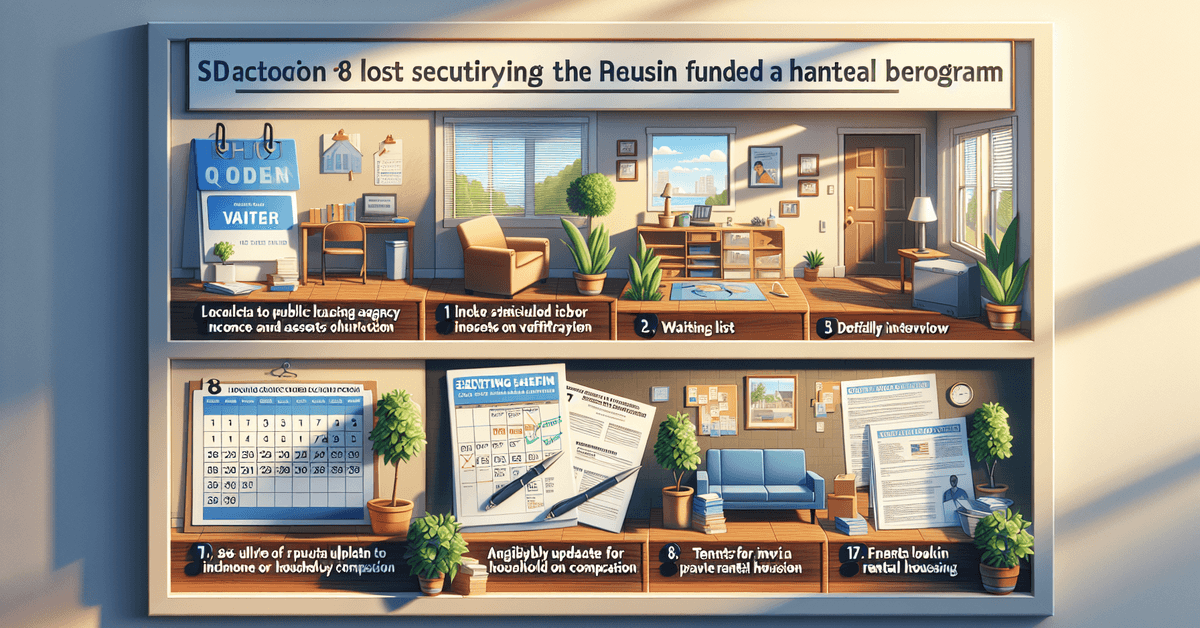
Submit an Application
Application methods differ. Some PHAs allow online applications, but many still use mail-in or in-person forms.
Be ready to provide details such as total household income, assets, family composition, and any relevant documentation. Missing documents can slow down your case.
Attend the Initial Interview
If your application advances, you'll typically be invited to an eligibility interview. This is a chance for the PHA to verify documents and clarify information. At this stage, keeping your information consistent is helpful.
Wait for Notification
This part can require patience. After careful review, PHAs will let you know whether you qualify. If successful, you’ll receive a voucher or a spot on the waiting list.
What Happens After Approval?
Finding an Eligible Rental Home
Voucher holders are generally permitted to search for housing on the private market rather than being limited to specific public units.
This flexibility allows you to choose a home that fits your location preferences, work situation, or family needs.
However, the selected property must meet program requirements. It needs to pass a health and safety inspection, and the landlord must agree to participate in the Section 8 program.
Not all landlords accept vouchers, so the search process can sometimes take longer than expected.
Many Public Housing Authorities (PHAs) provide resource lists, online search tools, or partner listings to help narrow down options.
Using these tools can save time and increase your chances of finding an approved rental more quickly.
Rent Calculation Process
The PHA determines the subsidy amount using a structured formula. This calculation takes into account your household income, family size, and local fair market rent levels.
In most cases, participants are expected to contribute around 30% of their adjusted monthly income toward rent and utilities. The remaining portion is covered by the voucher program, paid directly to the landlord.
It’s worth noting that if you choose a unit priced above the local payment standard, you may need to pay the difference out of pocket.
Understanding this early can help you set realistic expectations during your housing search.
Lease Signing and Moving In
Once you find a suitable rental and it passes inspection, the lease agreement is finalized between you and the landlord.
At the same time, the PHA establishes a housing assistance payment (HAP) contract with the landlord to manage subsidy payments.
After everything is approved, you can move into the property just like with a standard rental. However, ongoing compliance is essential.
You must follow lease terms, maintain the property, and report any major changes to your PHA.
Changes such as income increases, job status, or household size must be reported promptly.
These updates may affect your subsidy amount, so staying proactive helps avoid complications later.
Important Tips and Considerations
- Waiting Lists Move Slowly. Many applicants remain on lists for years. Checking status or updating contact information regularly can prevent losing a spot.
- Prepare Documentation. Having IDs, income records, tax returns, and proof of citizenship ready from the beginning may reduce delays.
- Stay Informed. Rules, open application periods, and income limits sometimes shift; sign up for alerts if the PHA offers them.
- Consider Other Programs. If waitlists are closed, explore related rental assistance programs or nonprofit offerings.
Common Challenges and Clarifications
Why Do Some Applications Get Denied?
Most denials happen due to over-income, inconsistent documentation, or ineligible status. Sometimes applicants find the reasons unclear and have the right to request a review or clarification from the PHA.
How Does Portability Work?
Section 8 vouchers are typically portable. That means recipients can transfer assistance from one area to another, sometimes across state lines. Not every landlord participates, so searching can require flexibility.
Impact of Family or Income Changes
Household and financial shifts must be reported promptly. Increased income could lower the benefit or, in rare cases, disqualify the household. Transparency is recommended, even though these rules feel complicated.
Section 8 Application Process: A Quick Comparison Table
| Step | What It Involves | Tips |
|---|---|---|
| 1. Find PHA | Search HUD directory for nearest agency | Check multiple nearby PHAs if possible |
| 2. Application | Submit form with income and documentation | Follow all instructions carefully |
| 3. Waitlist | Placed on list if demand is high | Update your status to stay active |
| 4. Interview | PHA verifies application and documents | Bring all requested paperwork |
| 5. Approval | Receive voucher or placement notice | Promptly seek suitable housing |
Conclusion and Next Steps
Section 8 can offer lasting peace of mind—though it’s not a quick fix. Staying informed, organized, and persistent tends to improve the odds.
Perhaps the initial complexity makes the eventual reward even more valuable. For those seeking stability or a fresh start, learning each part of the process, even at your own pace, provides a solid foundation.